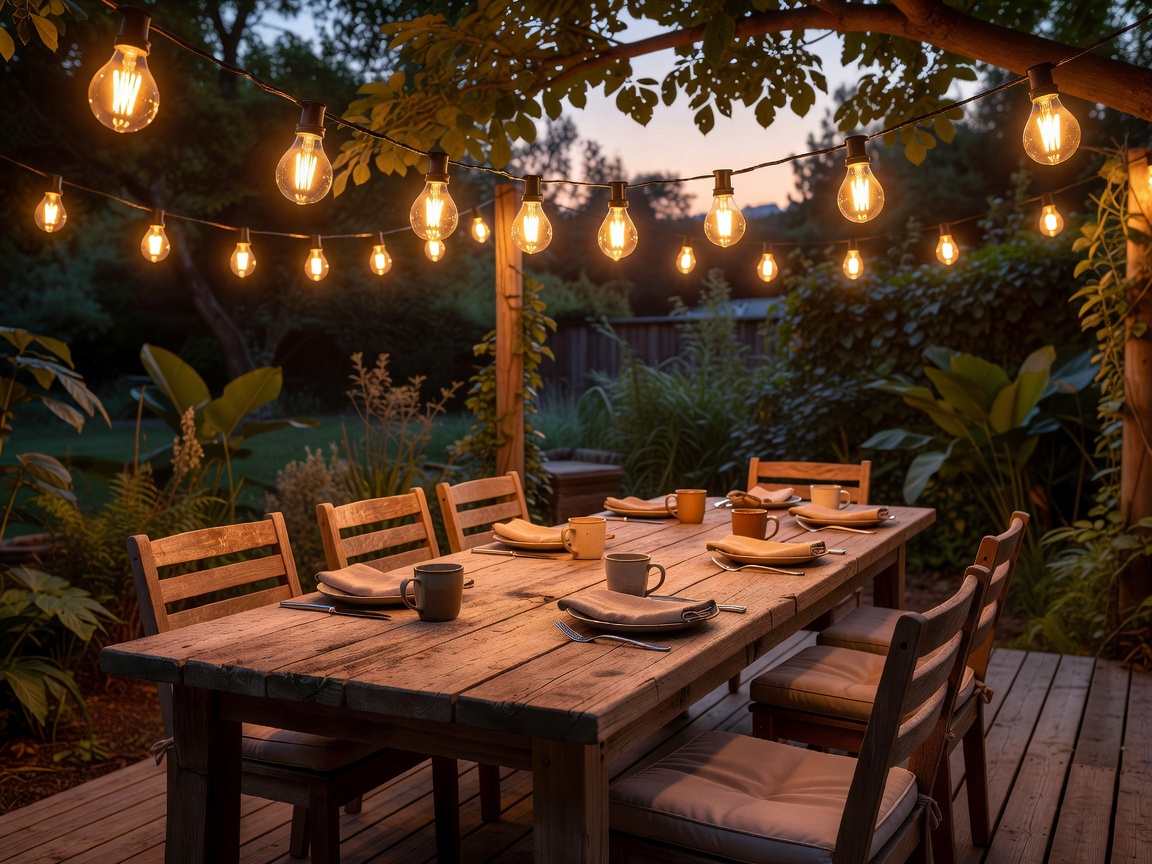
Nothing transforms a barren backyard or plain patio into a welcoming, festive retreat quite like overhead string lights. However, finding an outdoor outlet to power traditional café lights can be a frustrating and restrictive hurdle. Decorative solar string lights bypass this problem entirely, giving you the freedom to drape ambiance anywhere the sun shines.
Understanding the System
A solar string light set consists of a strand of LED bulbs wired to a remote solar panel box. This box contains both the photovoltaic cells needed to capture sunlight and the rechargeable battery required to power the strand after sunset. Because the panel is on a lead wire (usually 3 to 6 feet long), you can position the decorative lights in the shade (like under a gazebo or deep within a tree canopy) while staking or clipping the panel itself out in direct sunlight.
Popular Styles of Solar String Lights
1. Copper Wire Fairy Lights
These consist of tiny LED nodes embedded in a thin, flexible copper wire. They are incredibly lightweight, making them perfect for wrapping tightly around tree trunks, winding through trellises, or bunching inside glass mason jars for custom lanterns. Because the LEDs are so small, they draw very little power, often lasting 10-12 hours on a single charge.
2. Globe / G40 Café Lights
Mimicking the classic Italian bistro aesthetic, these feature spherical bulbs usually spaced 12 inches apart. They provide a brighter, more distinct light footprint suitable for illuminating outdoor dining tables. When shopping for these, look for shatterproof acrylic or polycarbonate bulbs rather than glass, as outdoor winds can easily knock suspended bulbs against wooden posts.
3. Edison / S14 Vintage Style
These are larger, elongated bulbs that simulate the look of vintage filament lights. They offer a highly sought-after aesthetic but require more energy. Consequently, Edison-style solar strands generally have larger solar panels and heavier batteries to compensate for the higher power draw.
Color Temperature and Modes
For a relaxing, cozy atmosphere, always look for a warm white color temperature rating, ideally between 2200K and 2700K. Bright white or daylight bulbs (4000K-6000K) can feel stark and clinical, which counteracts the relaxing vibe most people want in an outdoor living space. Furthermore, many solar string light panels feature a "Mode" button on the back, allowing you to cycle through lighting patterns such as steady-on, slow fade, twinkling, and sequential flashing.
Pros and Cons
- Pros: Unmatched placement flexibility; totally waterproof when dealing with integrated LED systems; zero operating cost; creates instant mood lighting.
- Cons: The lead wire limits how far the start of the strand can be from the sun; large Edison styles may not stay lit all night during short winter days; fragile wires on fairy styles require careful handling.
Installation Tips
Never use the string light wire to bear tension. If you are stringing lights across a gap larger than 10 feet, run a sturdy steel guide wire first, and then zip-tie the light strand to the guide wire. This prevents the delicate internal copper wiring of the light strand from snapping under tension or high winds. Finally, ensure the solar panel is angled directly southward at roughly a 30-45 degree angle for maximum solar absorption.