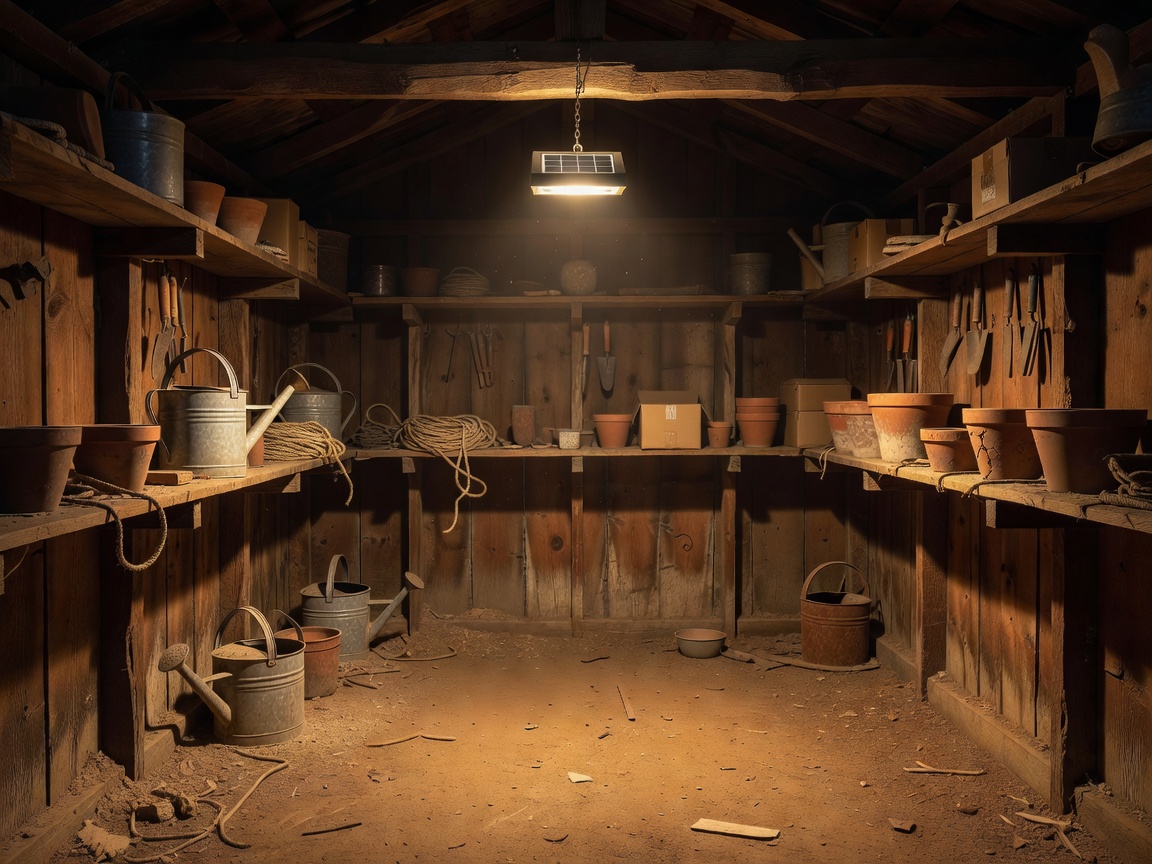
Outbuildings like garden sheds, barns, detached garages, and chicken coops are incredibly useful, but they often lack one crucial utility: electricity. Running a dedicated 120V line from your main circuit breaker to a shed at the back of your property can cost hundreds, if not thousands, of dollars. Indoor solar shed lights offer an elegant, affordable workaround, bringing dependable brightness to off-grid structures.
How Indoor Solar Lighting Works
Unlike landscape lighting which is entirely self-contained, indoor solar lighting inherently requires a split-system design. The solar panel is mounted on the exterior roof or a high sun-facing wall to absorb daylight. A weather-resistant cord runs from the panel, through a small drilled hole in the structure, to the lighting unit mounted securely on the ceiling or interior wall.
Because these lights are used on demand rather than automatically turning on at dusk, they rely on manual switches, classic pull cords, or remote controls. This means the battery only discharges when you are actively in the shed, allowing a single day’s solar charge to provide hours of bright workspace illumination.
Form Factors and Variations
1. Pendant Styles
Pendant solar lights hang from the rafters or ceiling on a cord, casting a wide, 360-degree cone of light. They often feature a classic industrial aesthetic with a metal or plastic lampshade. These are excellent for hanging directly above workbenches or potting tables where you need focused, downward illumination.
2. Flush Mount Ceiling Panels
These resemble standard modern home light fixtures. They screw directly flat against the ceiling and feature a frosted diffuser that scatters light evenly across the entire shed. If your shed has a low ceiling, a flush mount is the best choice to prevent accidentally bumping your head against the fixture.
3. Utility Tube Lights
Mimicking the long footprint of traditional fluorescent shop lights, LED tube solar lights distribute illumination across a wider area. These are highly recommended for large, elongated structures like single-car detached garages or livestock run-ins.
Control Mechanisms
A major consideration when buying a shed light is how you plan to turn it on. While pull cords are classic and reliable, they can be annoying to fumble for in total darkness. Many modern systems include an RF (Radio Frequency) remote control, allowing you to turn the light on from outside before you even open the shed door. Some advanced models also feature daytime activation capabilities; historically, solar lights would not turn on if the panel was receiving sunlight, but newer shed lights bypass this circuitry to allow you to light up a dark, windowless shed during the middle of the day.
Pros and Cons
- Pros: Immediate, massive cost savings over hardwiring a shed; simple DIY installation requiring just a ladder and a drill; completely safe low-voltage wiring.
- Cons: Limited cord lengths restrict panel placement; heavily shaded roofs will result in poor battery charging; some models cannot operate during daylight hours.
Installation Summary
Ensure the solar panel is securely screwed into the roof decking or fascia and seal any hole drilled for the cable with exterior-grade silicone caulk to prevent water intrusion. Always coil and secure excess cable inside the shed to prevent it from becoming a snag hazard around tools.